Contact Us On: +44 0612 88888
Welcome To Mathima

Mathima method
How the Mathima Method Works
A structured system that shows you exactly what to do when thinking breaks down, whether you are supporting your own learning or guiding others. Attention, memory, and reasoning become more reliable under real-world demand.
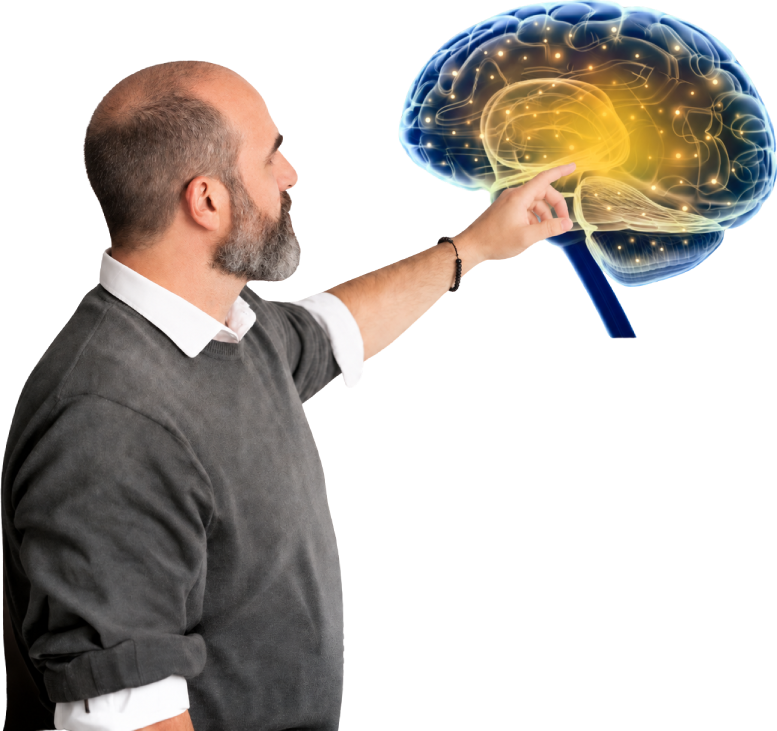
Strengthening the Processes Behind Thinking
The Mathima Method focuses on developing the cognitive processes that enable individuals to interpret information, organise their thinking, and respond effectively to complexity.
Many traditional learning approaches prioritise subject knowledge. While essential, the ability to apply that knowledge depends on the strength of the cognitive processes that support thinking - shaping how individuals focus attention, retain information, organise ideas, and execute tasks.
Through structured activities, participants strengthen attention, working memory, and executive functioning. These exercises are designed to improve how information is processed, helping individuals manage multiple demands with greater clarity and control.
As these capabilities develop, individuals become more aware of how they think. They begin to recognise when attention drifts, when information becomes difficult to manage, or when tasks feel overwhelming.
This awareness enables adjustment. Individuals start to organise information more effectively, focus more deliberately, and respond to challenges with greater control.
This approach can be applied individually or delivered through a Cognitive Coaching System, where teachers and practitioners learn how to recognise breakdown and respond effectively in the moment.

Stage 1
Training
Structured activities strengthen core processes.

Stage 2
Awareness
Participants recognise how thinking works.
Stage 3
Control
Thinking becomes more deliberate and organised.
How Thinking Works
Effective thinking depends on the interaction of several cognitive processes that work together to interpret information and guide decisions.
Attention determines which information is noticed and prioritised. In any situation, individuals are exposed to large amounts of information. Attention allows the brain to focus on the details that are most relevant.
Memory plays a key role in holding and recalling information. Working memory allows individuals to keep information in mind while using it to reason through a task, while short-term memory helps retain instructions and important details.
Executive functioning helps organise these processes. It allows individuals to plan actions, structure information, regulate behaviour, and manage complex tasks step by step.
When these processes operate efficiently, individuals can interpret situations clearly and respond thoughtfully. When they become overloaded or inconsistent, thinking can become disorganised or inefficient.
Strengthening these processes improves the overall quality of reasoning, learning, and decision-making.

The Cognitive Domains Strengthened by CogniEnhance
The Mathima system develops core cognitive domains that shape how individuals process information, organise their thinking, and respond to complexity.
These domains form the foundation of effective thinking - supporting the ability to focus on what matters, manage multiple streams of information, structure ideas clearly, and generate effective solutions.
When these processes operate efficiently, individuals sustain focus, retain key information, organise their thinking, and adapt their reasoning as situations evolve.
When they become overloaded or inconsistent, thinking can lose clarity, tasks feel more demanding, and performance becomes less reliable.
By strengthening these domains through structured cognitive training, individuals develop the mental capabilities required for effective learning, analytical thinking, and problem-solving.
Selective Attention
The ability to focus on relevant information while filtering out distractions.
Sustained Attention
Maintaining concentration over an extended period of time.
Divided Attention
Managing multiple sources of information at the same time.
Working Memory
Holding information in mind while using it to complete a task.
Short-Term Memory
Temporarily retaining information so that it can be used when needed.
Planning
Organising actions and steps in order to achieve a goal.
Organising
Structuring information and ideas in a logical and coherent way.
Sorting
Categorising information according to patterns, relationships, or rules.
Problem Solving
Analysing situations and selecting the most effective response.
Cognitive Control: Regulating How Thinking Is Applied
Cognitive control refers to the ability to regulate how information is received, processed, and acted upon when completing tasks.
Within the Mathima system, cognitive control is developed through a structured Input–Process–Output model. This model helps individuals understand how information flows through their thinking and how each stage influences the final result.
By strengthening control over these stages, individuals become better able to interpret information accurately, organise their reasoning more clearly, and respond with greater precision.
Cognitive control helps reduce avoidable mistakes, improves consistency in performance, and supports more deliberate decision-making.
Within the Cognitive Coaching System, this
allows professionals to guide how thinking is structured, not just what is
being learned.

Input
The input stage refers to how information is noticed, interpreted, and understood. Strengthening this stage improves accuracy when reading instructions, analysing information, or responding to complex situations.

Process
The processing stage involves analysing information and organising it in a meaningful way. Strengthening this stage improves reasoning, categorisation, and logical thinking.

Output
The output stage refers to how individuals respond after information has been interpreted and organised. Strengthening this stage improves precision and reduces impulsive errors.
The Mathima Learning Journey
The Mathima learning journey follows a structured progression designed to strengthen thinking step by step.
- Participants begin by strengthening core cognitive domains through targeted exercises that develop attention, memory, and executive functioning. As these abilities improve, individuals begin to recognise how their thinking works and how it influences the way they approach tasks.
- This awareness supports the development of cognitive control strategies that regulate how information is interpreted, organised, and applied.
- Over time, these improvements begin to transfer into real-world contexts such as learning environments, professional tasks, and everyday decision-making.
- This same progression is used to train teachers and practitioners to apply the method in real-world settings.
Apply the Method Through a Cognitive Coaching System
The Mathima Method is not only used directly. It is also delivered through a Cognitive Coaching System that equips teachers and practitioners to guide thinking in real time.
For Teachers
Apply the method in the classroom by recognising breakdown in attention, processing, and task alignment, and responding in the moment to keep students thinking clearly and independently.
Explore Teacher Cognitive Coaching SystemFor Counsellors and Practitioners
Use the system to interpret behaviour as a
signal of cognitive breakdown and apply structured interventions that restore
thinking and improve independence.
How Mathima Differs from Traditional Learning Approaches
Most approaches focus on what individuals need to learn. Mathima focuses on what happens when thinking breaks down.
This system can be used directly or delivered through a Cognitive Coaching System that equips teachers and practitioners to recognise breakdown and respond in real time.
By strengthening attention, memory, and cognitive control, the method improves how individuals take in information, organise their thinking, and respond to tasks.
This leads to more consistent performance, clearer reasoning, and greater independence under real-world demand.